Design & Craftsmanship
Inside the Source Factory: The 8-Step Custom Leather Wallet Manufacturing Process
Published on Oct 22, 2026
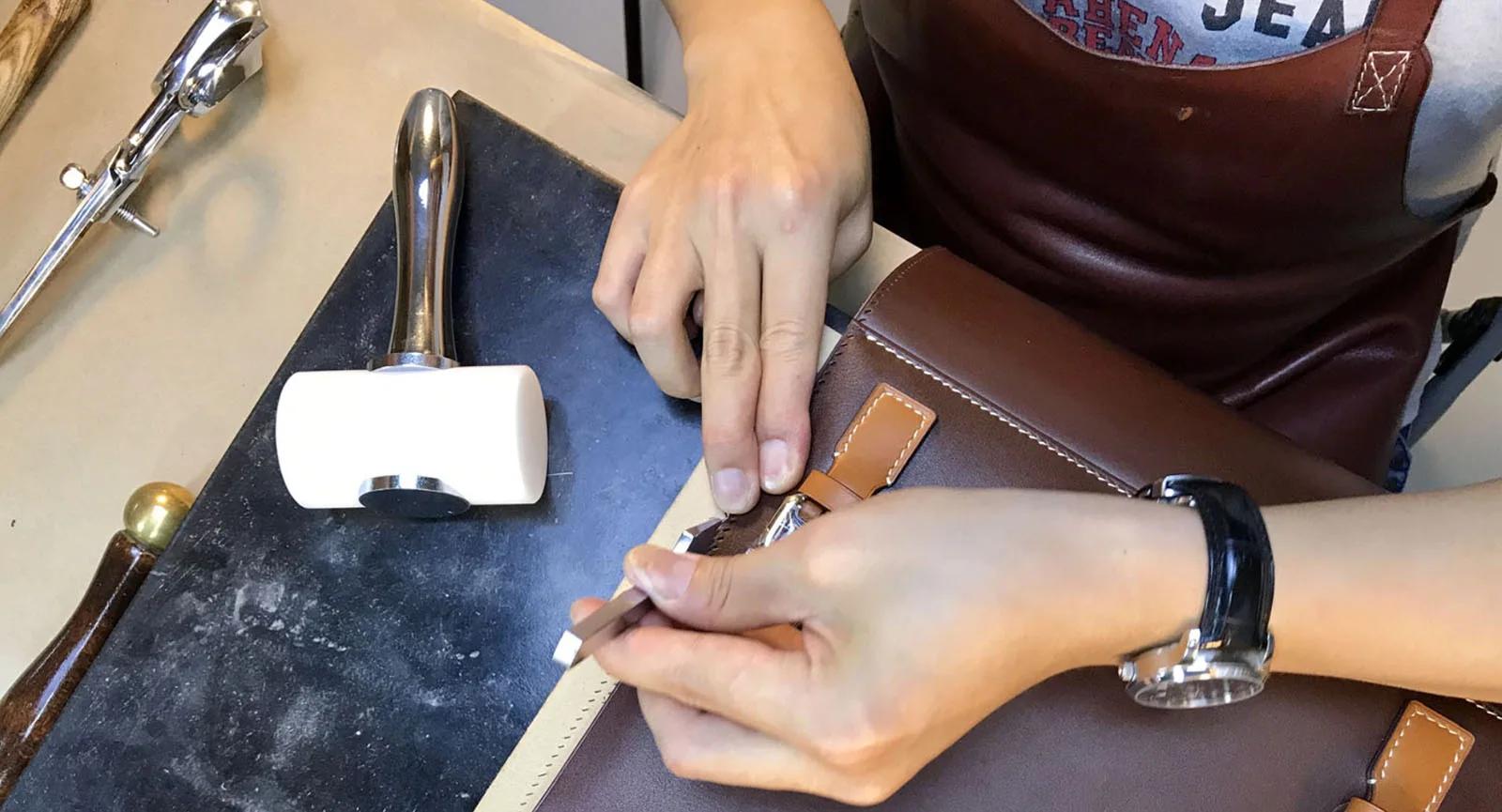
As a brand owner or procurement manager, we know your biggest supply chain anxiety: How do you ensure that the 1,000th wallet off the production line feels exactly like the "golden sample" you initially approved?
Unlike synthetic PU, genuine leather is a natural material with a life of its own—complete with scars, growth marks, and varying tension zones. The truth is, manufacturing premium private label leather goods is never a mindless automated assembly line. It is a precise intersection of data, strict standards, and decades of artisanal craftsmanship.
Today, we are pulling back the curtain on the complete production lifecycle of a high-end leather wallet. By understanding these 8 core manufacturing steps, you will not only decode the true costs behind your OEM/ODM quotation but also gain the expert confidence needed for your next bulk inspection.
The 8 Critical Milestones: From Raw Hide to Premium Wallet
1. Leather Pre-Inspection: Grading Every Hide
When a full cowhide arrives at the production line, the first step is never the cutting machine. Instead, experienced craftsmen inspect the leather under high-intensity lighting. Using a silver marking pen, they meticulously circle natural scars, insect bites, and loose grain areas. This strict pre-screening is the foundational step to keeping your retail return rates near zero.
2. Manual Die-Cutting & Strategic Material Yield
To avoid the marked flaws, the yield rate for premium top-grain leather is usually controlled strictly between 60% to 75%. This is the primary reason genuine leather costs significantly more than synthetic alternatives. Furthermore, our cutters practice "directional cutting" based on the physical tension of the hide. For instance, the main body of the wallet requires the firmest leather from the cow's back to maintain its structure, while gussets or folding edges must utilize the naturally elastic belly leather to prevent cracking over time.
3. Precision Skiving: The Secret to a Slim Profile
Keeping a fully loaded wallet from looking bulky relies entirely on the skiving process.
- Edge Skiving (Beveling): Using high-precision skiving machines, the edges of the leather pieces are thinned down to exactly 0.2-0.6mm. This ensures that folded and stitched edges remain perfectly flat without looking cheap or "bloated."
- Overall Splitting: For multi-layer card slots and interior dividers, the entire leather piece is split and thinned. This allows us to strictly control the final thickness of the wallet right from the physical root.
4. Surface Treatment & Precision Punching
Before sewing, the leather undergoes surface treatments such as tumbling, waxing, or light sanding to awaken its natural texture. For products demanding an artisanal, handmade aesthetic, we execute precision punching along the stitching line. Pre-punching uniform holes guarantees perfectly straight seams and exact stitch spacing.
5. Seamless Gluing & 3D Assembly
Prior to stitching, all components are precisely laminated using eco-friendly, high-strength adhesives. This isn't just for temporary fixing; it bonds the multiple layers into a single structural unit. When the wallet is bent or folded, this prevents the inner lining from wrinkling or delaminating.
6. High-Density Nylon Stitching
We discard standard cotton threads that easily fray, opting instead for heavy-duty, high-density nylon threads. We apply specialized backstitching at high-stress points—such as card slot openings and wallet corners—ensuring the product easily withstands years of daily, high-friction use.
7. Artisanal Edge Painting: A 3-to-5 Coat Dedication
The luxurious feel of a cut-edge wallet relies entirely on its painted edges.
- Preparation: Edges are first sanded to raise the leather fibers, creating a grip for the paint.
- Painting & Sanding: Craftsmen manually apply 3 to 5 coats of premium edge paint. After every single coat, the wallet enters a drying room, followed by fine sanding to ensure absolute smoothness before the next layer is applied.
- Final Polishing: This meticulous, time-consuming process completely seals the leather fibers, offering ultimate water resistance, durability, and a luxuriously rounded tactile feel.
8. Precision Hardware Installation
Whether integrating an RFID-blocking aluminum pop-up case, a YKK zipper, or solid brass snap buttons, hardware installation requires exact molds and calibrated pneumatic presses. We always insert invisible buffer layers during pressing to ensure a secure bite without ever denting or bruising the delicate premium leather surface.
B2B Buyer Q&A: Sourcing Insights
Q: Why is your leather yield rate so low (high material waste)? Can we reduce costs here? Honestly, if you are targeting the mass discount market, the yield rate can be squeezed. However, for a high-ticket Private Label brand, we refuse to use leather with natural scars or loose veins on the main visible panels. Sacrificing a bit of material yield to secure near 100% 5-star reviews on Amazon or your Shopify store is a highly profitable brand strategy.
Q: Hand-painted edges seem slow. Why not just use folded/turned edges to save time? It depends on your brand positioning. Turned edges are indeed faster and cheaper, making them suitable for fast fashion. However, the labor-intensive edge painting technique yields a clean, minimalist silhouette with sharp geometric lines. This specific aesthetic is currently dominating the premium men's and RFID wallet market.
Q: With so many interior card slots, how do you guarantee the bulk production won't end up thicker than the approved sample? This is where our precision skiving data comes in. During the sampling phase, we record the exact thickness (down to 0.1mm) of every single layer of leather. During bulk production, our splitting machines strictly follow these exact parameters. Even if you design a complex wallet with 8 card slots, the total assembled thickness will match your golden sample flawlessly.
Understanding these manufacturing nuances reveals a simple truth: a wallet that commands a premium retail price isn't just about the raw hide—it’s about the countless unseen refinements and compromises made along the way.
What product line are you planning for your 2027 catalog? Are you leaning towards an ultra-slim front pocket cardholder, or a high-tech smart tracker wallet? Let's discuss your tech packs today.