Design & Craftsmanship
Tri-Fold Wallets for Men: How We Solve the "Bulky" Problem for Private Labels
Published on Oct 23, 2026
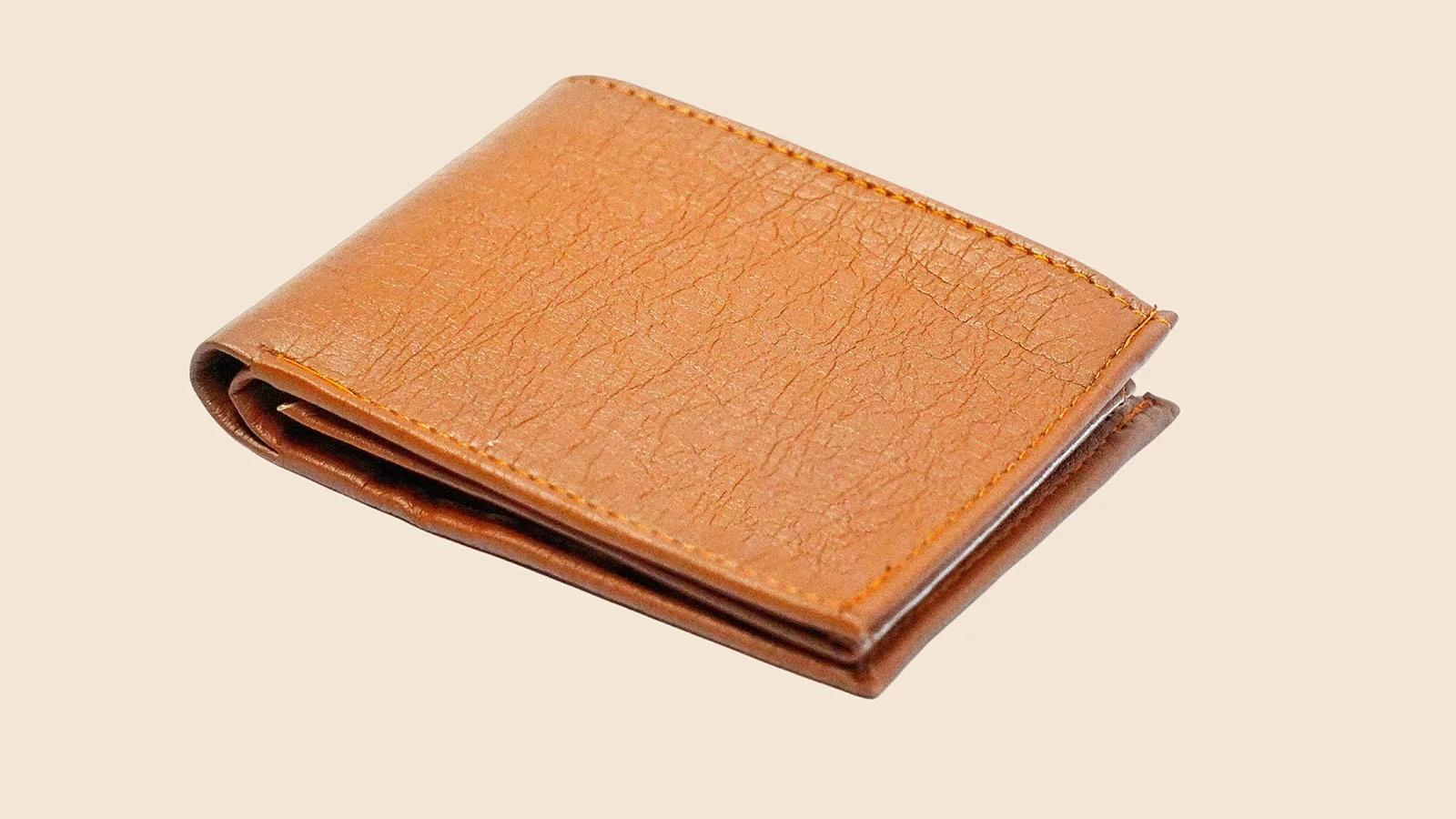
The Quick Answer: Let’s get straight to the point: the men's tri-fold wallet is still a massive retail seller, but poor manufacturing often turns it into a bulky "hamburger," leading to terrible reviews and high return rates. At our factory, we don't fix this by just shrinking the wallet. We completely re-engineer the inside using 0.4mm precision hinge skiving, T-cut card slot architecture, and 0.1mm RFID-blocking ripstop nylon. Here is how we do it.
If you run a private label brand, you already know the demand for "tri fold wallets for men" isn't going anywhere. Guys still love having plenty of room for cash, family photos, and a dozen cards. But you also know the nightmare that comes with selling them: the bulk.
Picture this: your customer loads up your brand-new wallet, slides it into his tailored suit or favorite jeans, and suddenly he’s carrying a brick. It ruins the silhouette, it's uncomfortable to sit on, and soon enough, you’re dealing with a refund request.
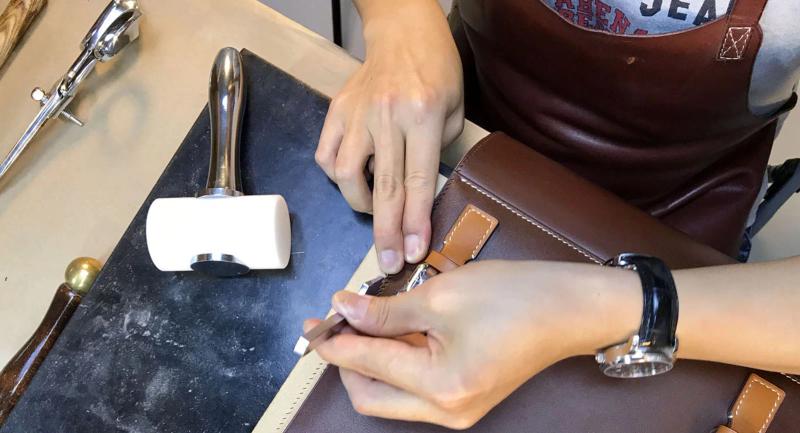
As a manufacturer who has spent years on the factory floor, we’ve helped countless brands avoid abandoning the classic tri-fold layout. Instead of giving up on it, we fix the physics. Here’s an honest, behind-the-scenes look at how our craftsmen engineer an ultra-slim, high-capacity tri-fold for our B2B partners.
The Real Reason Tri-Folds Get Fat
To fix the bulk, we first have to look at how cheap wallets are made. When a standard tri-fold is closed, you aren't just folding leather; you are stacking it. You are pressing together 2 layers of exterior leather, 2 layers of thick lining, and up to 9 layers of overlapping leather for the card slots—plus the cash and cards themselves.
If a factory just uses standard 0.8mm-1.0mm leather for all of this, the wallet is doomed to be fat before a single credit card even touches it. Here is how we rewrite the blueprint.
Factory Secret 1: The "T-Cut" Card Slot
This is the big one—the secret sauce that separates a cheap promotional giveaway from a luxury retail piece.
In low-end factories, workers just stack full rectangular pieces of leather on top of each other to make pockets. It’s fast, but it’s incredibly thick. On our benches, we use a T-Cut (or T-shape) pattern.
- How it works: Only the top 1cm (the part your customer actually sees and touches) is premium genuine leather. The hidden lower section is seamlessly stitched to a high-density, ultra-thin (0.1mm) nylon lining.
- The Result: By cutting out all that hidden, overlapping leather, we shave off up to 60% of the thickness in a 6-card panel. As a bonus, the cards actually slide in and out much smoother.
Factory Secret 2: Precision Hinge Skiving (0.4mm)
The absolute thickest parts of any tri-fold are the two "hinges" where the wallet folds.
- The Process: Instead of forcing thick leather to bend, our craftsmen run the folding margins through high-precision splitting machines, thinning the leather from 1.0mm down to a paper-thin 0.4mm.
- The Reinforcement: Now, you might wonder, won't that tear? To make sure it doesn't, we laminate a 0.05mm tear-resistant reinforcement tape inside the hinge. You get a fold that lays perfectly flat, but is actually structurally stronger than a stiff piece of unskived leather.
Factory Secret 3: Swapping to Ultra-Thin RFID Lining
A lot of old-school factories still use thick pigskin or heavy cotton twill for the cash compartment lining. It just adds dead weight. We gently push our clients toward high-density 70D ripstop nylon or 0.1mm woven RFID-shielding fabric. Not only does this instantly drop millimeters of thickness, but it upgrades your wallet to a "secure anti-theft" product. That’s a massive marketing win for your brand without adding any bulk.
Sourcing Q&A: Let's Talk Production
Q: Does precision skiving weaken the durability of the tri-fold wallet?
A: Honestly, it would if it weren't reinforced. But because we laminate that invisible, high-tensile tape (just 0.05mm thick) inside the thinned seams, the wallet easily survives years of back-pocket abuse while folding beautifully flat.
Q: Will T-cut card slots make the wallet feel "cheap" to my buyers?
A: Not at all. In fact, T-cut architecture is the exact same method used by top-tier European luxury houses. Your customer only ever sees and feels the premium rolled or painted leather edge. The engineering magic happens completely out of sight.
Q: Does it cost more to build a slimmed-down tri-fold like this?
A: Yes, it costs a bit more in labor. While we actually use slightly less leather (thanks to the T-cuts), the precision skiving, taping, and intricate stitching take our craftsmen more time. But think about your margins: solving the "bulk" problem lets you market this as a premium, engineered product. You can justify a much higher retail price, and your refund rates will drop to near zero.
Your Next Step: Don't let lazy manufacturing ruin your brand's reputation. If you’re sketching out a new line of men's wallets for 2027, send your tech packs our way. We’d love to show you how our team can maximize your wallet's capacity while keeping the bulk strictly in the past.