Market Insights
Vegan Leather Wallets: Where Brand Growth and Margin Actually Come From
Published on Oct 15, 2026
The short answer
Vegan leather wallets now sell to younger European and North American buyers who read a material claim as a signal of how a brand thinks. On a per-unit basis, a synthetic face panel generally produces less cut loss and a more repeatable color match than a hide, which changes the margin math on a full wallet program. The brand still owns the claim, so the factory's job is to document the panel, the backing, the lining and the adhesive that go into it.
Why the label sells the wallet before the leather does
The question I get most from European founders this season is not whether a factory can run a vegan wallet. Plenty can. It is whether the claim holds up the moment their customer searches it.
What we see on the buying side is that the material line on a spec sheet now gets treated like the price line. It is a filter, and it gets applied before anyone touches the stitching.
Here is what that looks like in practice with the buyers we quote for:
- They ask for the composition of four separate things — face panel, backing, lining and the adhesive in the fold — not one material name.
- They ask how the logo goes on, because a foil block reads differently on a coated surface than on a grain, and the logo is where the wallet is judged in the hand.
- They want the packaging copy to match the panel claim, since a contradiction between the two is the shortest route to a return.
- They ask for a reorder commitment on color, not just a first-shipment match.
The wallets I see winning shelf space in this category are rarely the cheapest on the table. They are the ones whose material story is short, specific and defensible.
The margin sits in the cut, not in the sticker price
A cheap corrected-grain hide can undercut a good coated panel on price per square meter. That comparison is also the wrong one. Where a synthetic panel earns its place is in how much of the material ends up in the wallet instead of the bin.
- A roll arrives at a consistent width in a continuous length, so a nested marker wastes less between parts than a hide with a neck, a belly and scars.
- Hide yield moves batch to batch, and a pattern that nests cleanly on one lot can lose a panel on the next.
- Color on a coated roll is set during coating, so a reorder tends to track the original more closely than a second dye lot does.
- Rework on a wallet lives in assembly, and a panel that punches, skives and folds predictably keeps fewer people on the line fixing it.
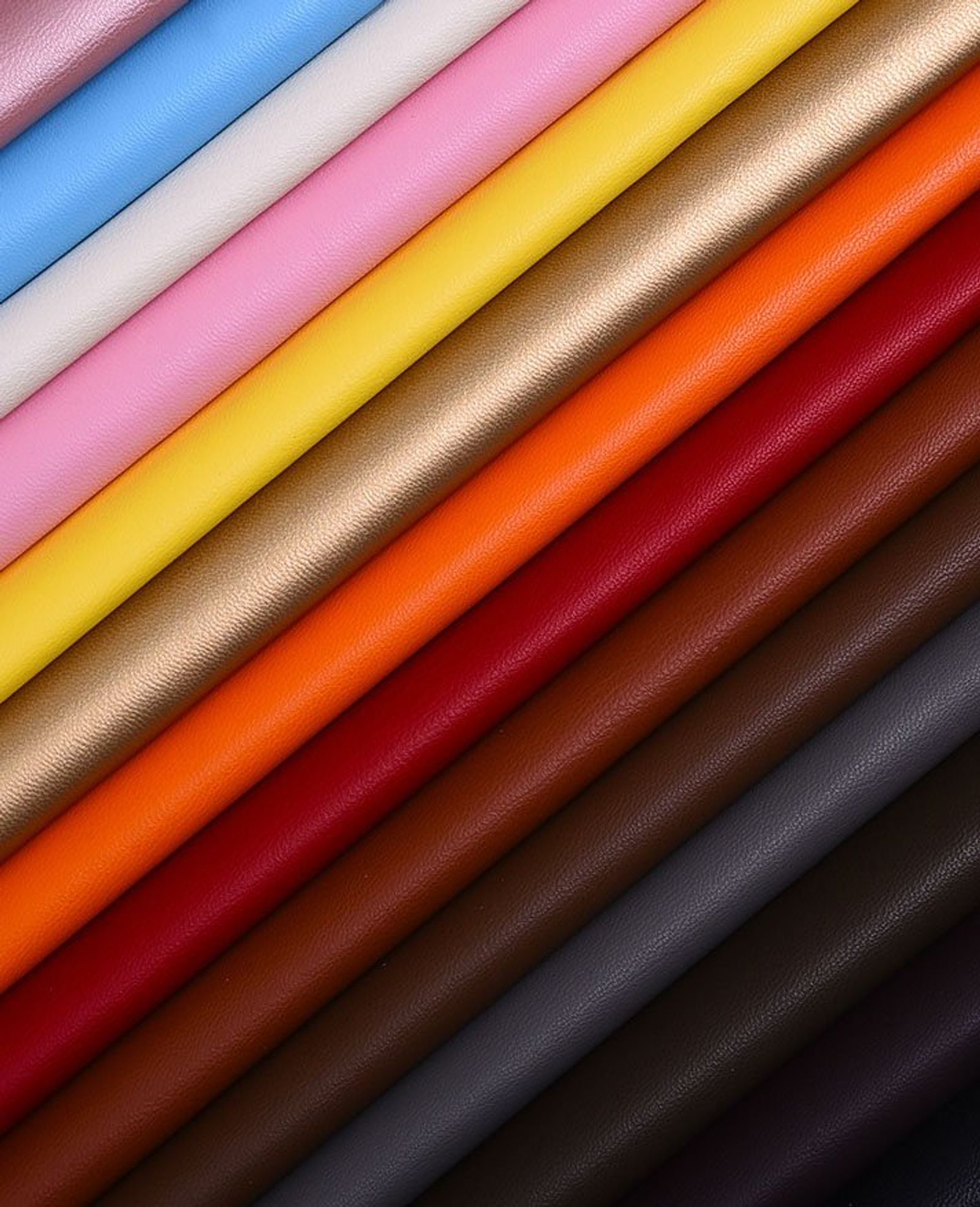
The stack I pulled off the rack this week runs from a pale pink through cream, a metallic gold and orange, into red, cognac, brown, charcoal and a deep purple, and the grain reads the same panel to panel. That repeatability is the product, not the color card.
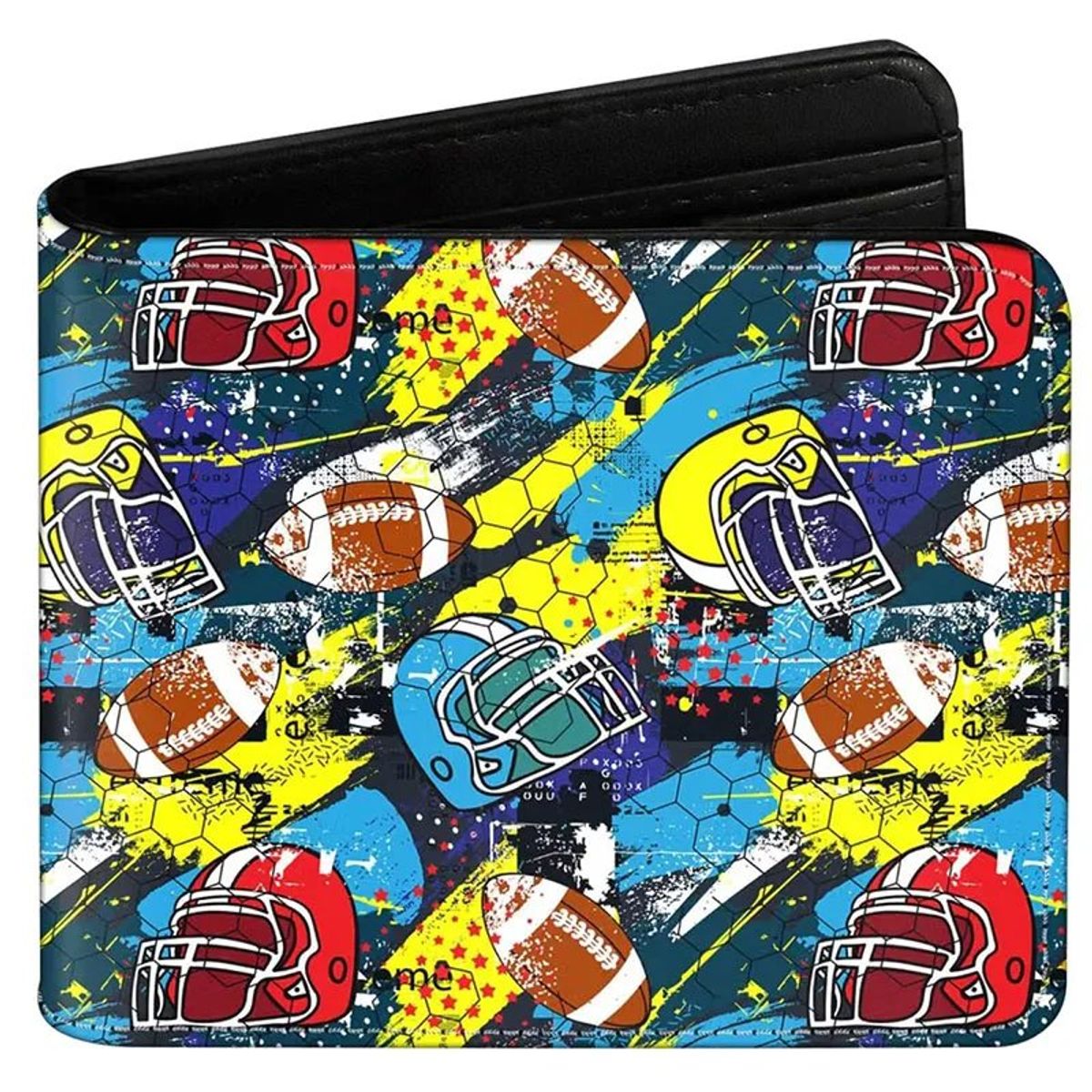
The printed bifold I opened last week makes the same point differently. It carries a full-bleed print of helmets and footballs across yellow and teal, married to a plain black panel along the top edge, with the print registering straight across the fold and the perimeter turned and stitched. The face is one cut panel, not four. On a printed face the risk is never the substrate — it is the second print run and the abrasion the ink takes at the fold.
What has to be documented before a brand claims anything
A cruelty-free line on a hangtag is a legal object, not a marketing flourish. In most cases the brand's compliance lead signs it, and the factory's job is to hand over the parts so that signature is easy.
- Face panel: composition, plus the supplier declaration on restricted substances for the market you ship into.
- Backing and lining: the two that get forgotten, and the two that most often fail a buyer's own review.
- Adhesive and edge finish: solvent-based cements and some edge paints are where a clean claim quietly breaks.
- Print ink: if the face is printed, ask which ink system and whether it is water-based.
- Packaging: a plastic window and a laminated box can undo what the panel just proved.
We would rather a brand run a narrow claim it can prove than a broad one it cannot. The customers driving this category are quick to check, and slow to forgive.
That is also why material decisions belong in the same meeting as the price negotiation. The archive on Market Insights covers how that shift is showing up in buyer briefs this year.
Frequently asked questions
What is the minimum order quantity for a custom vegan leather wallet?
MOQ moves with three things: the panel material, the hardware and the print. A stock color roll with a stock snap carries a lower floor than a color developed to your swatch, a custom die-cast or debossed plate, or a printed face that needs its own setup. Send the spec sheet with a color reference, the logo artwork and the hardware callouts, and we quote against that instead of guessing.
How long does a vegan leather wallet sample take, and what drives the bulk timeline?
Sample and production timing are set by whatever has to be made before the first unit can be sewn: whether the color is stock or developed, whether the print is digital or needs a plate, and whether the logo needs a new deboss die or a foil block. None of those has a fixed day count until the spec is frozen. Lock the panel and the logo treatment, and the calendar turns into a real number rather than an estimate.
Is vegan leather actually cheaper than genuine leather per unit?
Not automatically on material price — a good coated panel can sit above a cheap corrected-grain hide. The saving shows up in cut loss, in color consistency across reorders, and in less rework at assembly. Run both options through a full marker rather than a price-per-meter comparison; that is where the difference lands.
Where to start
If you are building a vegan wallet program, fix the panel, the logo and the hardware spec first, then argue price. Send the swatch reference, the artwork and the hardware callouts, and we will come back with a costed marker and a sample plan. The shape of the range is on our vegan leather wallet program, and the development process is on our OEM/ODM services page.