Material Research
The "Genuine Leather" Trap: Why B2B Buyers Must Avoid Split and Bonded Leather in Premium Wallets
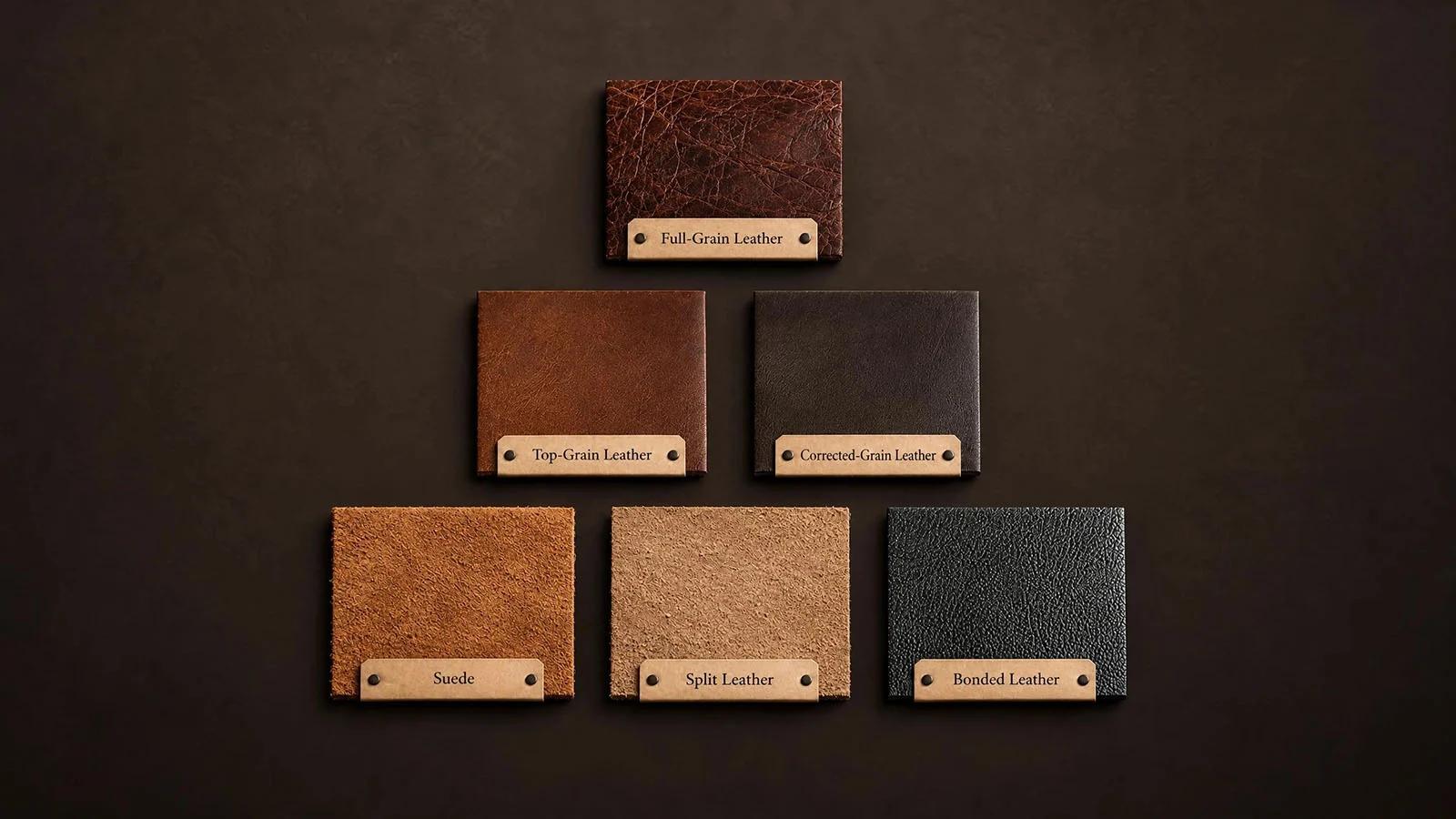
"Genuine Leather" is a deceptive marketing grade, not a mark of premium quality. In B2B manufacturing, products stamped "Genuine Leather" are typically made from bottom-layer split leather laminated with polyurethane (PU) or ground bonded leather scraps. While they cut unit FOB costs by 35%–50%, they fail ISO 5402 flexing tests and peel within 6 to 12 months.
What Is the Difference Between Genuine Leather, Real Leather, and Cowhide?
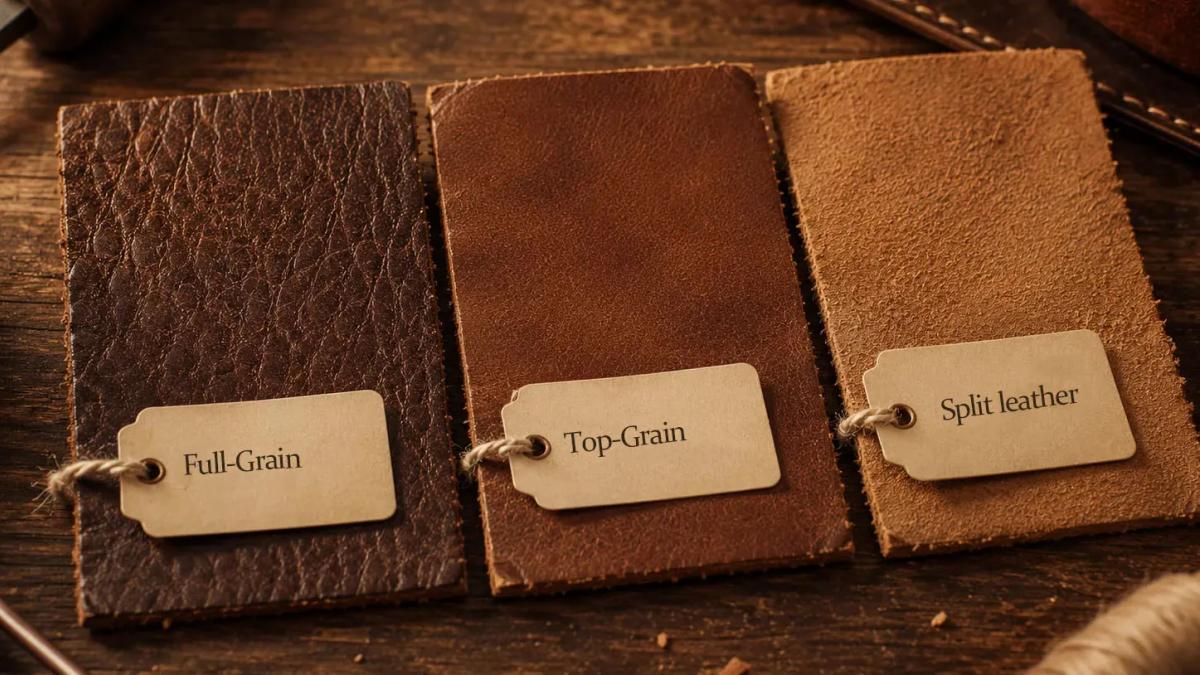
While consumers use genuine leather vs cowhide interchangeably, factories classify them strictly by hide depth. An unprocessed raw bovine cowhide enters our tannery at 4.0mm to 6.0mm thick—far too thick for a wallet. Industrial splitting machines slice the hide horizontally into two distinct layers: the dense upper grain (Full and Top Grain) and the loose bottom flesh (Split Leather, legally sold as "Genuine Leather").
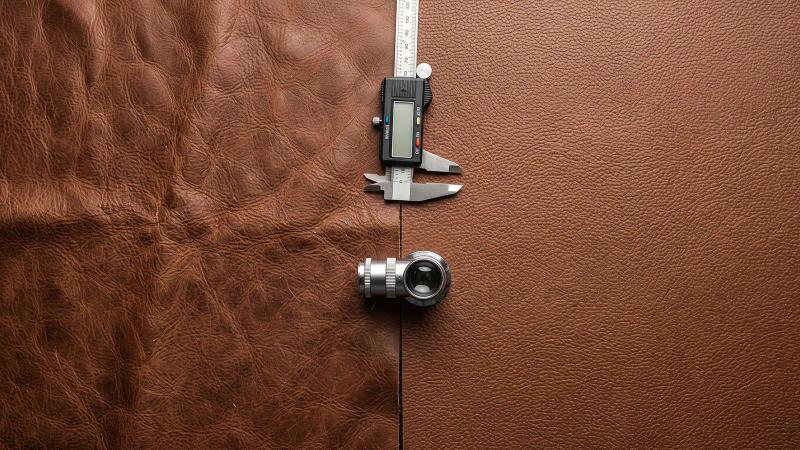
The Factory Floor Reality (Updated Q4 2026 QC Audit): When a sourcing manager brings us a competitor's wallet sample priced at an impossibly low $3.50 FOB claiming to be "100% Real Leather," the first thing our engineers do is slice the edge open under a 40x magnifier. Understanding the difference between genuine leather and real leather comes down to fiber density:
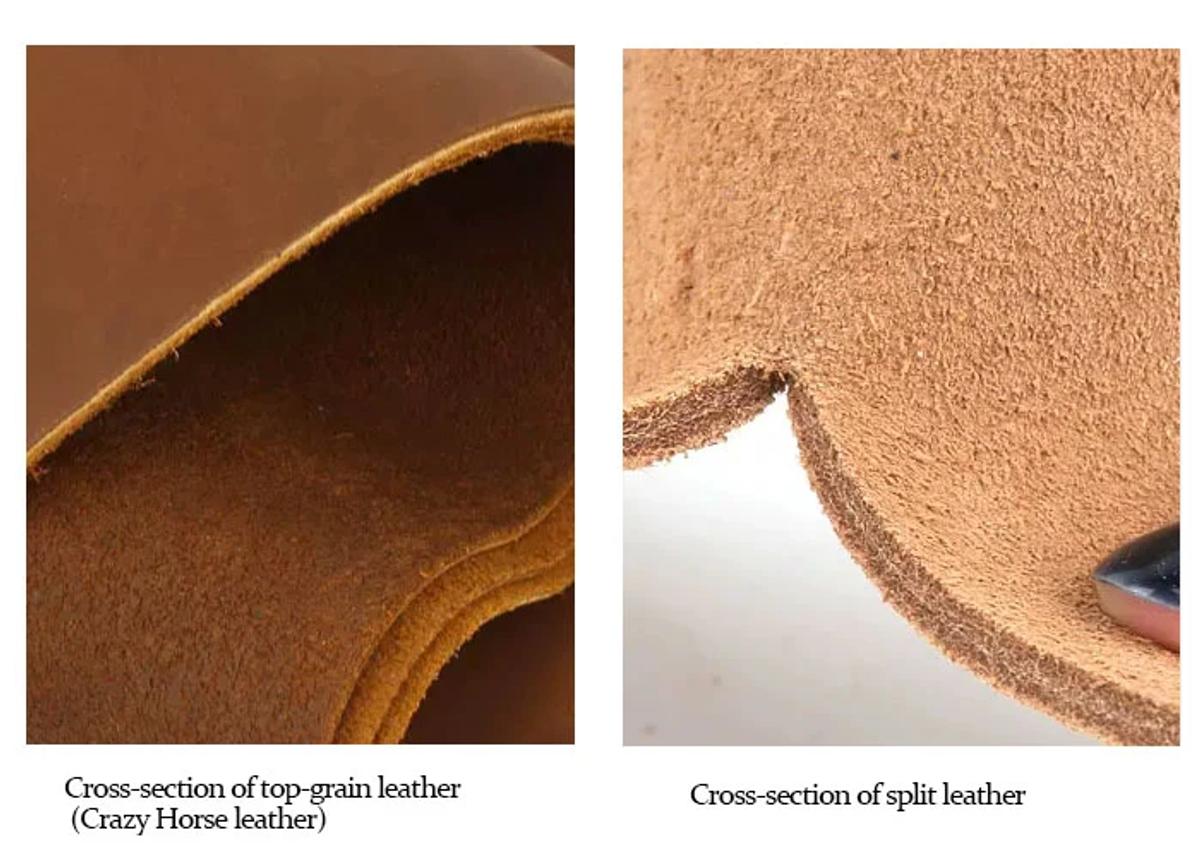
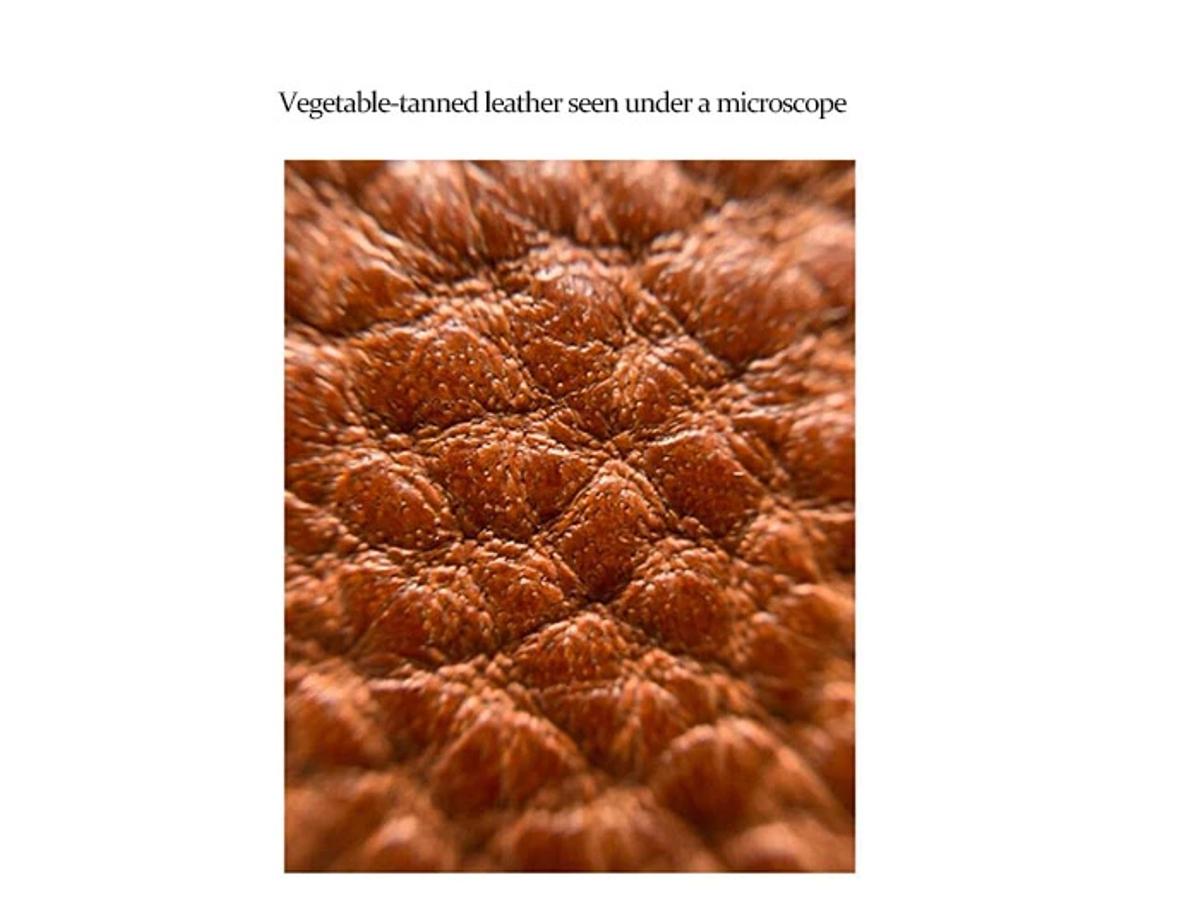
- The Upper Cut (The Real Investment): The top 1.2mm to 1.5mm of the cowhide contains tightly interwoven collagen fibers running parallel to the surface. This is where structural tensile strength lives.
- The Bottom Cut (The "Genuine" Trap): Once the top layer is removed, the remaining bottom layer (Split Leather) has fibers that run vertically and loosely. Because it has no natural skin surface, low-end factories spray or laminate a thick 0.15mm to 0.30mm polyurethane (PU) plastic film on top and emboss an artificial pebble grain into it. When your customer touches a "Genuine Leather" wallet, their fingers never actually touch cowhide—they are touching painted plastic glued to loose bottom flesh.
How Do Full Grain vs. Genuine Leather and Top Grain Compare Across the 6 Factory Tiers?
In a full grain leather vs genuine leather or top grain vs genuine leather comparison, the performance gap is measured in years of lifespan and material yield. Tier-1 leathers (Full Grain, Top Grain, Corrected Grain) retain the hide's structural dermis and pass 50,000+ flex cycles, whereas Tier-2 (Split/Suede) and Tier-3 (Bonded) degrade rapidly under daily pocket friction.
To help procurement teams audit their suppliers, here is our 2026 Baiyun Factory Laboratory Comparison Matrix across all 6 commercial leather grades:
| Leather Grade | Factory Tier | Material Yield Rate | Tensile Strength(ISO 3376) | Flexing Endurance (ISO 5402) | Optimal B2B Application |
|---|---|---|---|---|---|
| 1. Full-Grain Leather | Tier 1 (Upper Hide) | 60% – 70% (30%–40% cutting waste) | ≥ 22 N/mm² | > 80,000 cycles (No cracking) | Heritage EDC wallets, bespoke luxury goods ($75+ retail) |
| 2. Top-Grain Leather | Tier 1 (Upper Hide) | 85% – 90% (10%–15% cutting waste) | 18 – 22 N/mm² | > 50,000 cycles (No cracking) | Mainstream premium OEM wallets & cardholders |
| 3. Corrected-Grain | Tier 1 (Upper Hide) | 90%+ (Highly uniform surface) | 16 – 20 N/mm² | > 45,000 cycles | Saffiano/Litchi structured handbags & corporate gifts |
| 4. Split Leather ("Genuine Leather") | Tier 2 (Bottom Hide) | 90% – 95% | 8 – 12 N/mm² | < 15,000 cycles (PU film delaminates) | Fast-fashion budget belts; avoid for premium wallets |
| 5. Suede | Tier 2 (Bottom Hide) | 80% – 85% | 8 – 10 N/mm² | N/A (High oil/water absorption) | Interior anti-scratch linings for tech sleeves & bags |
| 6. Bonded Leather | Tier 3 (Floor Scrap) | 95%+ (Supplied in synthetic rolls) | < 4 N/mm² | < 3,000 cycles (Immediate cracking) | $1–$2 promotional giveaways; never for retail leather goods |
To help procurement teams audit their suppliers, here is our 2026 Baiyun Factory Laboratory Comparison Matrix across all 6 commercial leather grades:
- Tier 1 — The Upper Hide (Full-Grain, Top-Grain, Corrected-Grain):
- Full-Grain is untouched by sanding drums, preserving natural pores that develop a rich patina, though dodging range scars drops our clicking yield to 60%–70%.
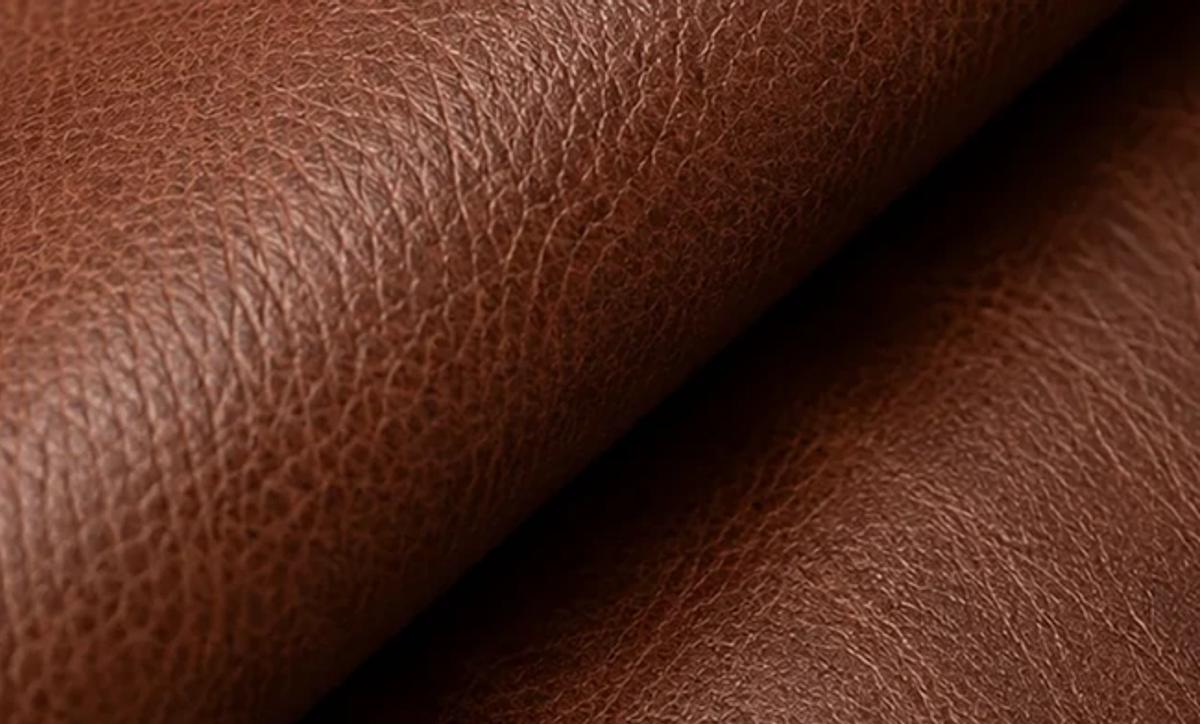
- Top-Grain has its top 0.1mm–0.2mm lightly buffed to remove minor blemishes, achieving an 85%–90% yield while keeping tight dermal fibers—making it the backbone of scalable OEM wallet production.
- Corrected-Grain uses hides with heavier natural scars that are sanded flat, coated with pigments, and heat-stamped under hydraulic plates with patterns like Saffiano cross-hatch. It looks slightly synthetic because the natural pores are sealed, but it offers 100% color uniformity and extreme scratch resistance favored by major luxury houses. The cut is only half the story, though — the tanning method and surface finishing decide how that fiber ages in a pocket, and our ultimate guide to leather grades breaks each process down.
- Tier 2 — The Bottom Flesh (Split Leather & Suede):
- Split Leather is the primary culprit behind the "Genuine Leather" label. When skived down to 0.4mm–0.5mm for wallet card slots, split leather loses almost all tear resistance—stitching needles easily perforate it like postage stamps, causing card pockets to rip when a user inserts 2 or 3 credit cards.
- Suede is simply split leather sanded on the flesh side to raise a velvet nap. While tactilely soft, it acts like a sponge for hand sweat, denim dye, and water. On our production line, we rarely use suede for wallet exteriors; instead, we split it ultra-thin to serve as protective interior linings for luxury bags and eyewear pouches.
- Tier 3 — The Workshop Scrap (Bonded Leather):
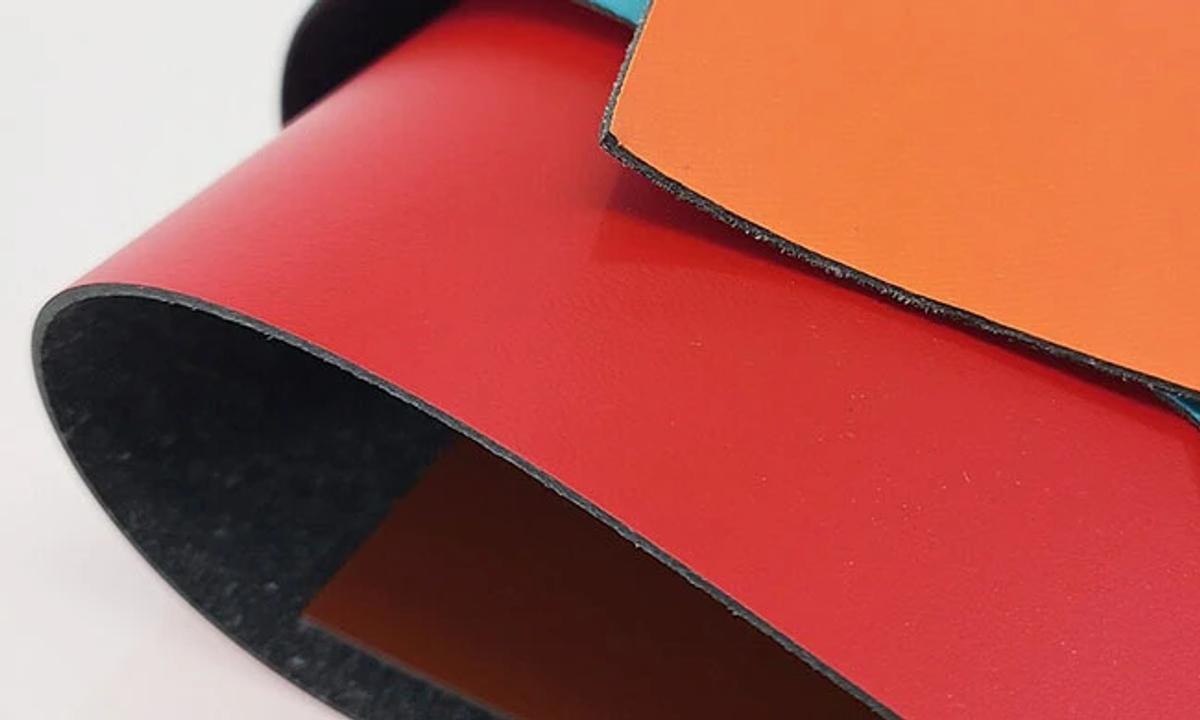
- In our industry, we call Bonded Leather the "hot dog" or "particle board" of leather. It is manufactured by shredding tannery floor trimmings into dust, mixing them with polyurethane binders, and rolling the slurry onto a paper or fabric backing. Despite containing 10% to 20% real leather fibers (which some unscrupulous suppliers use to claim "real leather" content), it has zero fibrous tension. You can tear it by hand. Even a well-made vegan microfiber leather outperforms bonded leather tenfold.
Why Do Split Leather and Bonded Leather Cause High B2B Return Rates (RMAs)?
Split and bonded leathers fail in wallets due to inter-layer delamination and edge-paint cracking. Under ISO 11644 adhesion testing, the heavy PU film glued onto loose split-leather fibers separates after 6 to 12 months of body heat, humidity, and back-pocket bending, triggering 1-star retail reviews for "fake peeling leather".
For a private label brand, saving $1.50 per unit on raw materials by accepting "Genuine Split Leather" destroys long-term customer lifetime value (LTV) in three ways:
The "Plastic Peeling" Scandal: When a wallet bends thousands of times at the center fold, Top-Grain leather flexes naturally with the hide's collagen fibers. In laminated Split Leather, the rigid PU topcoat and the spongy bottom flesh expand at different rates. Within a year, air bubbles form at the fold, and the surface flakes off like sunburned skin.
Edge-Paint Collapse: Premium Top-Grain wallets undergo our 3-to-4-coat hand-sanded edge-painting process, where the paint bonds tightly to dense fibers. Split and bonded leathers have mushy, fibrous edges that absorb moisture unevenly, causing the edge paint to crack and peel off in strips within 90 days.
Foul Chemical Odor: Because Bonded Leather and heavily coated Split Leather rely on solvent-based polyurethane adhesives to hold loose fibers together, unpacking a bulk sea-freight container after 30 days on the ocean often releases a pungent chemical smell—instantly ruining the unboxing experience of a premium gift.
How Can Sourcing Managers Audit a Factory's Leather Grade Before Mass Production?
Never accept "Genuine Leather" on a Purchase Order (PO) or Proforma Invoice (PI). Require suppliers to specify "100% Top-Grain Cowhide (Un-laminated)" or "Full-Grain Vegetable-Tanned Cowhide," and demand un-painted cross-section swatches prior to bulk clicking to verify continuous fiber density from top to bottom. We hold our own line to that same standard: the slim cardholders and card holder wallets we build for corporate gifts programmes are cut from Tier-1 hides and quoted at flexible MOQs.
On our factory floor in Baiyun District, Guangzhou, we train visiting sourcing managers to run three 30-second physical tests on sample hides:
- 1. The Cross-Section Loupe Test: Look at an un-dyed cut edge. Full-Grain and Top-Grain show a gradual transition from ultra-tight surface fibers to slightly looser inner fibers. Split leather shows a sharp horizontal line where a solid plastic film sits atop fuzzy suede fibers.
- 2. The Thumb-Press Wrinkle Test: Press your thumb firmly into the leather and twist slightly. Real Top-Grain or Full-Grain will show fine, radiating micro-wrinkles (like human skin) that vanish when released. PU-coated Split Leather or Bonded Leather will either feel stiff like cardboard or form large, unnatural plastic creases.
- 3. The Skived Tear Test: Ask the factory to skive a scrap piece to 0.4mm (standard card-slot thickness) and pull it hard with both hands. Top-Grain will resist tearing; Split and Bonded leather will snap effortlessly.
Frequently Asked Questions (B2B Leather Sourcing FAQ)
Q1: If a supplier quotes me "Genuine Calfskin," is that still low-grade split leather?
A: Ask for clarification immediately. While "Genuine Leather" on retail tags usually hides Tier-2 split leather, some non-native English-speaking factories casually write "genuine leather" simply to mean "real animal hide, not PU vegan leather." To protect your brand, forbid the word "Genuine" in your tech pack and specify Full-Grain or Top-Grain along with the required thickness (e.g., 1.2mm–1.4mm) and ISO 3376 tear-strength standards.
Q2: Is Corrected-Grain leather the same as PU-coated Split Leather?
A: No—and confusing the two is a costly mistake. Corrected-Grain uses the strong Tier-1 upper hide that has been buffed and embossed with a uniform pattern (like Saffiano); it retains high tensile strength and lasts for years. PU-coated Split Leather uses the weak Tier-2 bottom flesh laminated with a plastic film. Corrected-Grain is a luxury staple; laminated Split Leather is a fast-fashion shortcut.
Q3: When does it make sense for a B2B brand to use Suede or Split Leather?
A: Suede (abraded split leather) is an excellent secondary material when used as an interior lining for watch rolls, travel jewelry cases, eyeglass pouches, or the inside of bill compartments. Because interior linings do not endure heavy structural tension or constant folding, Tier-2 suede provides a plush, luxury velvet feel without risking structural failure.
Q4: How much more does a Top-Grain wallet cost in OEM production compared to a Split Leather wallet?
A: Based on our 2025–2026 raw hide procurement data, upgrading a standard bifold wallet (requiring ~1.2 to 1.5 sq. ft. of leather) from laminated Split Leather to authentic Top-Grain Cowhide (85%–90% yield) adds roughly $1.80 to $2.60 to the factory FOB unit cost. However, it enables a $30 to $50 higher retail price point and reduces customer defect returns to almost zero. If you want that upgrade without a container-sized commitment, our OEM/ODM line runs flexible MOQs and returns samples in 3 to 5 days, so the Top-Grain version can be in front of buyers before you scale.